Running is one of the most effective ways to improve fitness, build endurance, and support long term health. However, knee pain when running is one of the most common problems many runners experience. What often begins as a small ache or mild discomfort can gradually become persistent pain that affects training, performance, and everyday movement.
The good news is that most running related knee pain can improve with the right combination of physiotherapy, strength training, recovery, and training adjustments. Understanding what is causing the pain is the first step towards long term recovery and injury prevention.
At Clear Physio, we regularly help runners manage knee pain, improve running biomechanics, and return to training safely with personalised physiotherapy treatment plans.
Understanding Knee Pain When Running
Knee pain while running can develop for several different reasons. Running places repetitive force through the lower limbs, especially around the knee joint, hips, calves, and ankles. If the body is unable to tolerate these loads efficiently, irritation and pain can begin to develop over time.
Many running injuries are linked to overuse rather than a single traumatic event. This means the pain often builds gradually rather than appearing suddenly. Runners may notice stiffness after training, discomfort going downstairs, or pain that increases during longer runs.
Some of the most common running related knee injuries include patellofemoral pain syndrome, iliotibial band syndrome, tendon irritation, and soft tissue overload. Runner’s knee symptoms often include pain around the kneecap, tenderness during running, discomfort after sitting for long periods, or irritation when climbing stairs.
Causes of Knee Pain While Running
One of the biggest contributors to knee pain when running is overtraining and poor load management. Increasing running mileage too quickly, running too frequently without adequate recovery, or suddenly introducing hills and speed sessions can overload tissues around the knee.
Muscle weakness and imbalances also play a major role. Weak glute muscles, reduced hip stability, and poor quadriceps strength can increase stress through the knee joint during running. This changes how forces are absorbed and distributed through the lower limb.
Poor running technique can also contribute to running injuries. Some runners may overstride, collapse through the hips, or place excessive load through certain tissues due to inefficient movement patterns.
Footwear and biomechanics are equally important. Running shoes that do not suit your running style or foot mechanics may contribute to poor loading patterns and increased joint stress. In some cases, orthotics or gait retraining may help improve running efficiency and reduce discomfort.
Patellofemoral Pain Syndrome Explained
Patellofemoral pain syndrome is one of the most common causes of runner’s knee. It refers to pain developing around or behind the kneecap due to irritation between the patella and the underlying joint surfaces.
The pain is often triggered by activities that place repeated stress through the front of the knee. Running downhill, climbing stairs, squatting, or sitting with bent knees for long periods may aggravate symptoms.
Runner’s knee does not always mean there is structural damage within the knee. In many cases, the pain is related to poor load tolerance, muscle weakness, or running biomechanics that increase pressure around the kneecap.
Managing symptoms usually involves reducing aggravating activities temporarily while improving strength, movement control, and lower limb stability through rehabilitation exercises.
Iliotibial Band Syndrome and Other Running Injuries
Iliotibial band syndrome, often called IT band syndrome, is another common running injury. The iliotibial band runs along the outside of the thigh and can become irritated where it passes the knee joint.
Runners with IT band pain usually experience discomfort along the outside of the knee that worsens during longer runs. The pain may begin mildly but gradually become sharper if ignored.
Tendon irritation and cartilage overload can also contribute to knee pain in runners. Repetitive impact, reduced recovery, and poor biomechanics may all increase stress through soft tissues around the knee.
Soft tissue overuse injuries are particularly common among runners training for events, increasing mileage quickly, or returning to running after time away from sport.
How Physiotherapy Helps Knee Pain
Physiotherapy plays an important role in diagnosing and treating knee pain when running. A sports physiotherapy assessment helps identify the factors contributing to the injury rather than simply focusing on the painful area itself.
Running assessments often include strength testing, flexibility assessment, movement analysis, and evaluation of running mechanics. Physiotherapists also review training history, footwear, recovery habits, and overall training load.
Strengthening weak muscle groups is often one of the most effective ways to reduce knee pain. Improving glute strength, hip stability, and quadriceps control can reduce excessive stress through the knee joint.
Improving running mechanics may also help redistribute forces more efficiently. Small adjustments to running cadence, posture, and stride length can sometimes reduce knee loading significantly.
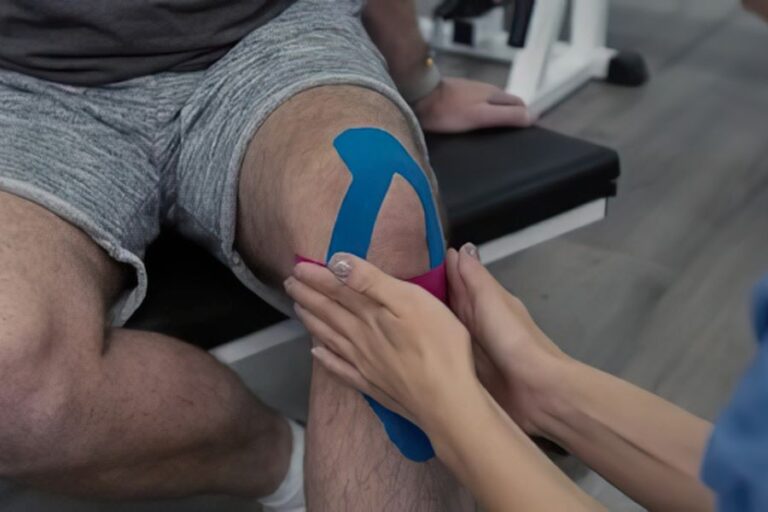
Physiotherapy treatment may also include manual therapy, sports massage, taping, mobility work, and rehabilitation exercises to reduce pain and inflammation.
Exercises for Knee Pain From Running
Rehabilitation exercises form a major part of knee pain recovery. Glute strengthening exercises help improve pelvic control and reduce excessive movement through the knee during running.
Quadriceps rehabilitation exercises can improve knee stability and support better force absorption during impact. Single leg exercises are often particularly useful because running itself is essentially a repeated single leg activity.
Hip and calf mobility exercises can also improve movement efficiency and reduce stiffness within the lower limb. Tight calf muscles or restricted hip mobility may increase stress on the knee joint during running.
Knee stability exercises help improve balance, coordination, and movement control. These exercises often focus on controlling knee alignment during squats, lunges, and single leg positions.
Running Technique and Biomechanics
Running biomechanics can influence how forces travel through the body during movement. Gait analysis allows physiotherapists to assess running form and identify movement patterns contributing to knee pain.
Improving running form does not necessarily mean completely changing someone’s natural running style. Small adjustments to cadence, stride length, or posture may sometimes improve efficiency and reduce stress on overloaded tissues.
Managing training volume is equally important. Many runners increase mileage too quickly or fail to include enough recovery between sessions. Gradual progression allows tissues to adapt more safely to increasing training loads.
Preventing Knee Pain While Running
Preventing knee pain involves balancing training with recovery, strength work, and sensible progression. Warm up exercises before running can improve mobility and prepare the body for impact activity.
Recovery is just as important as training itself. Sleep, rest days, and proper recovery routines help tissues repair and adapt after exercise.
Gradual training progression is one of the best ways to reduce injury risk. Sudden increases in speed, distance, or intensity place greater stress on the body and may contribute to overload injuries.
Choosing the right running shoes can also support injury prevention. Footwear should match your foot shape, running style, and training demands.
Strength training should form part of every runner’s programme. Improving lower limb strength can support running performance while reducing injury risk.
When to Seek Professional Help
Persistent knee pain should not be ignored, especially if symptoms continue for several weeks or begin affecting daily activities. Pain that worsens despite rest or training modification may require professional assessment.
Swelling, instability, locking, or the knee giving way should also be assessed by a physiotherapist or healthcare professional.
A sports physiotherapy assessment can help identify the exact cause of symptoms and provide a structured rehabilitation programme tailored to your running goals.
Return to Running Rehabilitation
Returning to running after injury should happen gradually. Progressive return to running programmes help rebuild load tolerance safely while reducing the risk of reinjury.
Monitoring pain and recovery throughout rehabilitation is important. Mild discomfort during rehabilitation exercises may be acceptable, but increasing pain or swelling often indicates the need for further adjustment.
Long term injury prevention focuses on maintaining strength, managing training loads, and continuing mobility work alongside running.
Conclusion
Knee pain when running is extremely common, but it does not always mean you need to stop running completely. Most running related knee injuries improve with proper rehabilitation, strength training, load management, and physiotherapy support.
Understanding the causes behind the pain is essential for long term recovery. Whether the issue involves runner’s knee, IT band syndrome, poor biomechanics, or training overload, the right treatment approach can help restore confidence and improve performance.
At Clear Physio, we help runners return to pain free movement through personalised physiotherapy treatment, running assessments, and rehabilitation programmes designed around individual goals.
FAQs
Why do I get knee pain when running?
Knee pain while running is often caused by overuse, poor load management, muscle weakness, running biomechanics, or training errors.
What is runner’s knee?
Runner’s knee usually refers to patellofemoral pain syndrome, which causes pain around the kneecap during running and other activities.
Should I stop running if my knee hurts?
Not always. Some runners can continue training with modified running loads and rehabilitation exercises, but persistent pain should be assessed professionally.
Can physiotherapy help knee pain from running?
Yes. Physiotherapy can identify movement issues, improve strength, reduce pain, and support safe return to running.
How long does knee pain recovery take?
Recovery time varies depending on the injury severity, training load, and rehabilitation programme, but many runners improve significantly within several weeks.