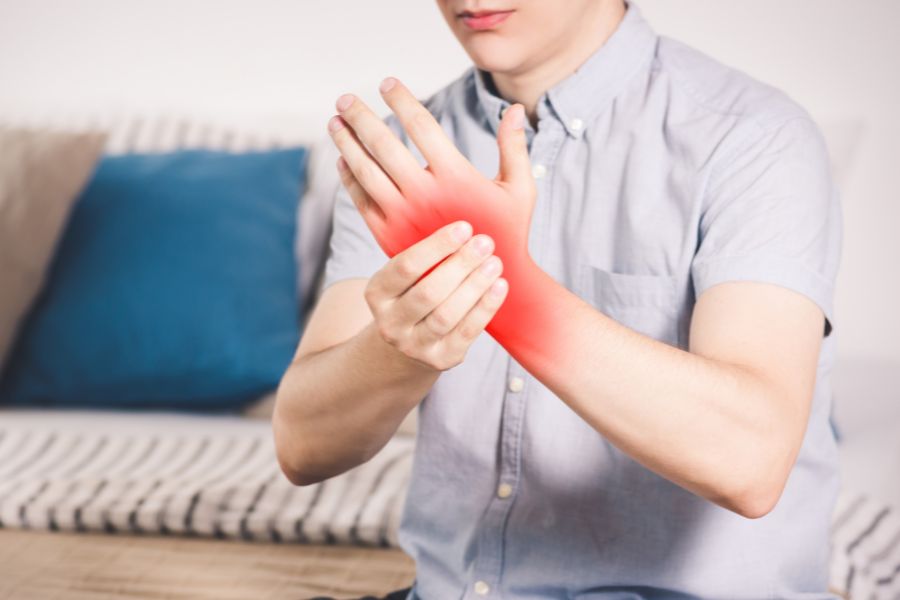
Have you noticed tingling or numbness in your ring finger and little finger, especially after sleeping, using your phone or keeping your elbow bent for a long time? You may also notice a weaker grip or find yourself dropping objects more often.
One possible cause is cubital tunnel syndrome. This happens when the ulnar nerve becomes irritated or compressed around the elbow. It is a common reason for hand numbness and can often be managed with physiotherapy, activity changes and appropriate exercises.
What Is Cubital Tunnel Syndrome?
Cubital tunnel syndrome affects the ulnar nerve, one of the main nerves running from your neck through your arm and into your hand.
The nerve passes around the inside of your elbow, close to the area often called the funny bone. Because the nerve sits quite close to the surface here, it can become irritated by pressure, repeated movement or prolonged elbow bending.
The ulnar nerve provides feeling to your little finger and part of your ring finger. It also helps control several muscles involved in grip and fine hand movements. This is why cubital tunnel syndrome can cause both numbness and weakness.
What Causes Cubital Tunnel Syndrome?
There are several reasons why the ulnar nerve may become irritated.
Sleeping with your elbow bent for long periods can place extra pressure on the nerve. The same can happen when holding a phone, reading or sitting with your elbow bent for a long time.
Leaning directly on the elbow can also irritate the nerve, especially if you regularly work at a desk.
Repeated bending and straightening of the elbow may contribute too. This can happen through certain jobs, sports or hobbies.
Previous elbow injuries, including fractures or dislocations, may change the space around the nerve and increase irritation.
In some people, the ulnar nerve may also move slightly out of position as the elbow bends, which can make symptoms more noticeable.
What Are the Symptoms of Cubital Tunnel Syndrome?
Symptoms can vary from person to person.
One of the most common signs is tingling or pins and needles in the ring finger and little finger. Numbness may become more noticeable at night or after keeping the elbow bent.
Some people experience aching or discomfort around the inside of the elbow.
As the condition progresses, you may notice reduced grip strength, difficulty holding small objects or problems with tasks such as opening jars, typing or buttoning clothes.
Dropping objects more frequently can also be a sign that the muscles controlled by the ulnar nerve are becoming weaker.
Cubital Tunnel Syndrome vs Carpal Tunnel Syndrome
Cubital tunnel syndrome and carpal tunnel syndrome can both cause hand numbness, but they involve different nerves.
Cubital tunnel syndrome affects the ulnar nerve and usually causes symptoms in the little finger and part of the ring finger.
Carpal tunnel syndrome affects the median nerve at the wrist and more commonly causes symptoms in the thumb, index finger, middle finger and part of the ring finger.
A proper assessment is useful because hand tingling can have several causes, including problems around the wrist, elbow, shoulder or neck.
How Is Cubital Tunnel Syndrome Diagnosed?
A physiotherapist can assess your symptoms, elbow movement, grip strength and sensation in the hand.
They may also look at your neck, shoulder and wrist to check whether another area could be contributing to your symptoms.
Strength and sensation tests can help identify whether the ulnar nerve is affected.
If symptoms are severe, persistent or unclear, further medical assessment or nerve conduction tests may sometimes be recommended.
When Should You See a Physiotherapist?
It is worth arranging an assessment if hand numbness keeps returning, lasts for several weeks or starts affecting everyday activities.
You should also seek advice if your grip is becoming weaker or you are finding it harder to write, type, hold objects or perform normal tasks.
Early assessment can help identify the cause and reduce the chance of symptoms becoming more persistent.
How Can Physiotherapy Help Cubital Tunnel Syndrome?
Physiotherapy treatment depends on what is irritating the nerve.
Your physiotherapist may suggest changing activities that place pressure on the elbow. This might include adjusting your desk position, changing how you hold your phone or avoiding leaning directly on the elbow.
Posture and ergonomics can also be reviewed, particularly if your symptoms are related to desk work.
Treatment may include mobility exercises, gentle strengthening and hands on treatment where appropriate. The aim is to reduce irritation, improve movement and help you return to normal daily activities.
Exercises for Cubital Tunnel Syndrome
Gentle wrist and arm exercises may be useful for some people.
A wrist flexor stretch can be performed by extending your arm with your palm facing upwards and gently pulling the fingers back with your opposite hand.
A wrist extensor stretch is similar, but the palm faces down while the opposite hand gently moves the wrist.
Ulnar nerve gliding exercises may also be recommended, but these should be performed carefully. Nerve exercises should not increase numbness, tingling or pain.
How Can You Reduce Ulnar Nerve Irritation at Home?
Try to avoid leaning directly on your elbow for long periods.
Changing your sleeping position may help if symptoms are worse at night. Some people find it useful to avoid sleeping with the elbow tightly bent.
If you work at a desk, check that your chair, keyboard and arm position are comfortable.
Regular breaks can also help if your work or hobbies involve repeated elbow movements.
How Long Does Cubital Tunnel Syndrome Take to Improve?
Recovery time varies depending on how long the nerve has been irritated and how severe the symptoms are.
Mild symptoms may improve with activity changes and physiotherapy. More persistent symptoms can take longer, particularly if weakness has developed.
When Might Further Medical Treatment Be Needed?
If symptoms continue to worsen, grip strength reduces significantly or there are signs of ongoing nerve damage, further medical assessment may be needed.
Some people with severe nerve compression may be referred for specialist review.
Can Cubital Tunnel Syndrome Come Back?
Yes, symptoms can return if the nerve becomes irritated again.
Managing posture, avoiding prolonged pressure on the elbow and changing repetitive activities can help reduce the risk of symptoms returning.
At Clear Physio, we can assess your symptoms, identify possible causes and develop a treatment plan based on your movement, lifestyle and daily activities.
Frequently Asked Questions
Why are my ring and little fingers numb?
Numbness in these fingers can be linked to irritation of the ulnar nerve, although other causes are possible. A professional assessment can help identify the reason.
Does cubital tunnel syndrome go away?
Mild cases can often improve with activity changes, physiotherapy and reducing pressure on the nerve.
Can physiotherapy help cubital tunnel syndrome?
Yes, physiotherapy can help by addressing movement, posture, strength and activities that may be irritating the ulnar nerve.
Is cubital tunnel syndrome the same as carpal tunnel syndrome?
No. Cubital tunnel syndrome affects the ulnar nerve around the elbow, while carpal tunnel syndrome affects the median nerve at the wrist.
Can sleeping with a bent elbow cause hand numbness?
Yes. Keeping your elbow bent for a long time can increase pressure around the ulnar nerve and may contribute to numbness or tingling.
This article is for general information and does not replace professional medical advice. If your symptoms are severe, worsening or associated with increasing weakness, seek assessment from a qualified healthcare professional.