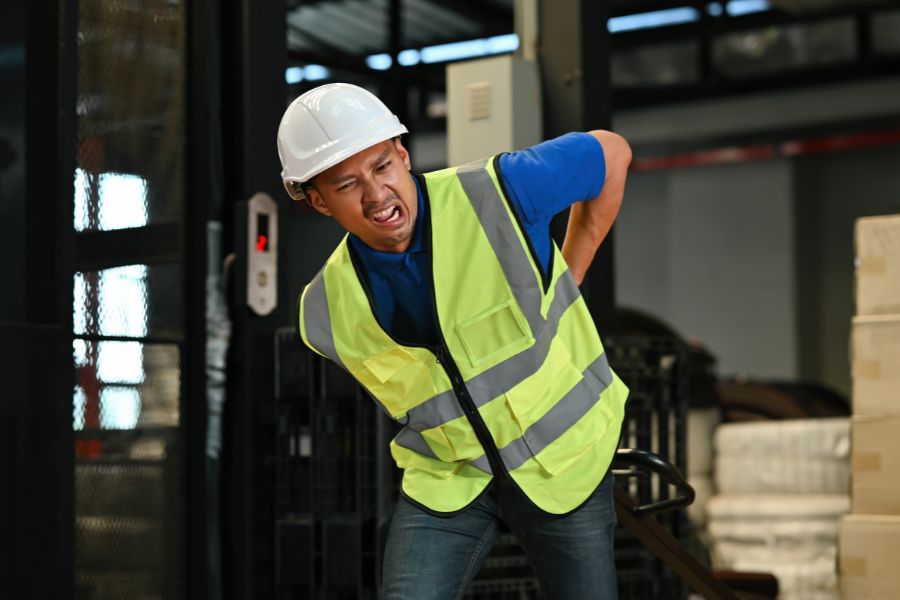
Back strain on construction sites is common because the work places repeated pressure on the body. Lifting, carrying, bending, kneeling and working in awkward positions can all affect the lower back, especially when the same movements are repeated throughout the day.
The good news is that small changes can help. Better lifting habits, regular movement, suitable equipment and enough strength can all reduce unnecessary strain.
At Clear Physio, we often help people who work in physically demanding jobs understand why their back is becoming sore and what they can do to stay active and comfortable.
Why Back Strain Is Common in Construction Workers
Construction work is physically demanding, and the back is involved in almost everything you do.
Heavy Lifting and Manual Handling
Moving materials, tools and equipment can place a lot of demand on the muscles around your back, hips and legs.
The problem is often not one heavy lift. It is repeating the same lifting pattern many times during a shift.
Repeated Bending and Twisting
Tasks that involve bending towards the floor, reaching or twisting can gradually irritate the back.
Try to change position where possible rather than staying bent or rotated for long periods.
Working in Awkward Positions
Construction workers often need to work in small spaces or at unusual angles.
When the body cannot move freely, certain muscles may have to work harder to keep you stable.
Long and Physically Demanding Shifts
Fatigue matters too.
As the day goes on, lifting technique can become less controlled and muscles may not respond as efficiently as they did at the start of the shift.
Use Proper Lifting Techniques to Protect Your Back
Good lifting technique can reduce unnecessary strain during manual handling.
Plan the Lift Before You Start
Before picking something up, think about where it needs to go.
Check the route, make sure there are no obstacles and consider whether the load is too heavy or awkward to manage alone.
Bend Through Your Knees and Hips
Try not to rely only on your lower back.
Bending through the hips and knees allows the stronger muscles in your legs to share the work.
Keep Heavy Loads Close to Your Body
Holding a load away from your body increases the effort needed to control it.
Where possible, keep the item close to you while lifting and carrying.
Avoid Twisting While Carrying
If you need to change direction, move your feet rather than twisting sharply through your spine.
Know When to Ask for Help
There is nothing useful about struggling with something that clearly needs two people or a mechanical aid.
If the load is too heavy, ask for help.
Warm Up Before Starting Physical Work
Going straight from sitting in a van to heavy lifting is not always ideal.
Why Warming Up Matters
A short warm up can help your joints and muscles move more freely before physical work begins.
Gentle Mobility Before Your Shift
Simple movements such as walking, gentle squats or easy trunk movements can help prepare the body.
You do not need a long exercise routine. A few minutes can be enough to get moving.
Preparing Your Back, Hips and Legs for Lifting
The hips and legs play a major role in lifting.
Gentle mobility in these areas can make bending and carrying feel more comfortable.
Stretch and Move Regularly During the Working Day
Staying in one position for too long can make the body feel stiff.
Hip Flexor Stretches
Tightness around the front of the hips can affect how comfortably you stand and extend through the hips.
A gentle hip flexor stretch may help after long periods of kneeling or bending.
Hamstring Mobility
Gentle hamstring mobility can help when the back of the legs feels tight after physical work.
Back Mobility Exercises
Easy movements through the spine can help reduce stiffness.
Move slowly and stay within a comfortable range.
Shoulder and Upper Back Movement
Construction work can also create tension around the shoulders and upper back, especially when carrying or working overhead.
Gentle shoulder rolls and upper back movement can help.
Using Breaks to Keep Moving
A short walk during a break can sometimes be more helpful than sitting still for the whole time.
Build Strength for Construction Work
Back strain prevention is not only about stretching.
Strength is just as important.
Strengthening Your Legs
Strong legs can help with lifting, carrying and climbing.
Exercises such as controlled squats may form part of a suitable strengthening programme.
Improving Trunk and Core Strength
Your trunk muscles help control the spine during lifting and movement.
Physiotherapy exercises can help improve strength and control in this area.
Building Hip Strength
Strong hip muscles can support better movement when lifting, walking and carrying.
Training for Lifting and Carrying
Exercise should reflect the demands of your job where possible.
If you regularly lift or carry at work, your rehabilitation programme may gradually include similar movements in a controlled way.
Use Equipment to Reduce Manual Handling Strain
Sometimes the best way to protect your back is not to lift the item yourself.
Trolleys and Mechanical Aids
Trolleys can reduce the amount of carrying required, especially when moving several items.
Hoists for Heavy Loads
Hoists and lifting equipment should be used when loads are too heavy or awkward for safe manual handling.
Ergonomic Equipment
Suitable equipment can make repetitive tasks easier and reduce the amount of unnecessary strain.
When Manual Lifting Should Be Avoided
If the item cannot be lifted safely, use the appropriate equipment or ask for assistance.
Recognise the Early Signs of Back Strain
Back pain often develops gradually.
Lower Back Tightness
A tight or heavy feeling after work can be an early sign that the area is becoming irritated.
Pain When Bending or Lifting
Pain that repeatedly appears during the same movement should not simply be ignored.
Reduced Movement
If you suddenly find it harder to bend, straighten or rotate, your back may need more attention.
Recurring Stiffness
Stiffness that returns every day or every working week may suggest that your current workload is more than your body is coping with comfortably.
Tingling or Numbness
Tingling or numbness, especially if it travels into the leg, should be assessed by a qualified healthcare professional.
What Should You Do if Your Back Starts Hurting at Work?
The right approach depends on your symptoms.
Avoid Ignoring Persistent Symptoms
Working through increasing pain for weeks can make the problem harder to manage.
Modify Activities Where Appropriate
If possible, temporarily reduce the tasks that clearly aggravate the pain.
Keep Moving Within Comfortable Limits
Complete rest is not always the best answer for uncomplicated back pain.
Gentle movement can often be helpful, provided it remains comfortable.
Know When to Seek Professional Advice
If pain is worsening, affecting your work or not improving, it may be time to arrange an assessment.
How Physiotherapy Can Help Construction Worker Back Pain
Physiotherapy can look at how your back responds to the demands of your job.
Assessing Your Back and Movement
A physiotherapist may check your movement, strength, flexibility and the activities that trigger symptoms.
Identifying Factors Contributing to Your Symptoms
The problem may relate to workload, reduced mobility, weakness or the way certain tasks are being performed.
Improving Strength and Mobility
A personalised programme can help build the capacity your body needs for physical work.
Manual Therapy
Manual therapy may be used where appropriate to support movement and manage symptoms.
Exercise Rehabilitation
Rehabilitation exercises can help restore strength, control and confidence.
Movement and Lifting Advice
A physiotherapist can also look at the lifting and carrying tasks you perform regularly and suggest practical adjustments.
Returning to Construction Work After a Back Injury
Going straight back to your heaviest duties may not always be sensible.
Gradually Increasing Physical Activity
Build activity step by step as symptoms and strength improve.
Rebuilding Lifting Capacity
Lifting exercises can be progressed gradually so your body becomes comfortable handling greater loads again.
Returning to Heavy Manual Tasks
Your return should reflect the actual physical demands of your job.
Reducing the Risk of Another Injury
Continue with useful strength and mobility work even after you start feeling better.
How to Protect Your Back Between Shifts
Recovery outside work matters too.
Recovery After Physical Work
Give your body time to recover after demanding days.
Regular Exercise
General strength and fitness can make physical work easier to tolerate.
Maintaining Mobility
Regular movement can help stop stiffness from building up between shifts.
Managing Repeated Workload
If you notice your back becoming worse as the working week goes on, pay attention to that pattern.
When Should You See a Physiotherapist for Back Pain?
Consider professional assessment if pain keeps returning, affects your work, restricts movement or is not improving.
Clear Physio can assess your symptoms and create a treatment and rehabilitation plan based on the physical demands of your job.
Frequently Asked Questions About Back Strain on Construction Sites
Why do construction workers get lower back pain?
Heavy lifting, repeated bending, awkward positions, long shifts and fatigue can all contribute to lower back discomfort.
How can I protect my back when lifting at work?
Plan the lift, use your legs, keep the load close, avoid twisting and ask for help when needed.
What is the safest way to lift heavy materials?
There is no single technique for every item, but using suitable equipment and avoiding loads that are too heavy to manage safely are important.
Should construction workers stretch before work?
Gentle mobility can help prepare the body for physical activity. It does not need to be complicated or time consuming.
What exercises can strengthen your back for manual work?
Exercises for the legs, hips and trunk can all be useful. The right programme depends on your current strength, symptoms and the demands of your job.
Keep Your Back Strong for Physical Work
Preventing back strain on construction sites is often about consistent habits. Good lifting technique, regular movement, appropriate equipment and enough strength can all help reduce unnecessary strain.
If back pain is starting to affect your work, Clear Physio can assess how you move and help you build a rehabilitation plan designed around your symptoms, job and recovery goals.