Muscle pain, stiffness and weakness can affect everyday movement, exercise and recovery after an injury. When muscles are not working as they should, even simple activities can become uncomfortable.
Electrical muscle stimulation treatment is one option physiotherapists may use as part of a wider rehabilitation programme. EMS uses controlled electrical impulses to stimulate selected muscles. Depending on the condition and treatment goals, it may support muscle activation, movement and rehabilitation.
At Clear Physio, treatment should always start with understanding why the problem is happening rather than simply treating the symptoms.
What Is Electrical Muscle Stimulation Treatment?
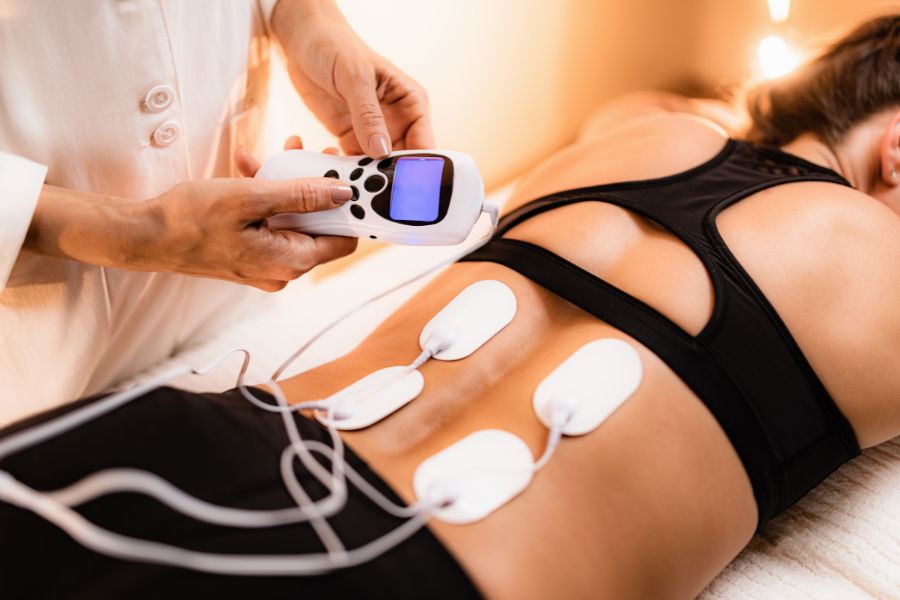
Electrical muscle stimulation, commonly called EMS, uses a device that sends controlled electrical impulses through electrodes placed on the skin.
These impulses stimulate nerves that control particular muscles and can cause the muscles to contract.
What Does EMS Mean?
EMS stands for electrical muscle stimulation. You may also hear terms such as neuromuscular electrical stimulation or NMES used in rehabilitation settings.
How Electrical Muscle Stimulation Affects Your Muscles
EMS can produce controlled muscle contractions without relying entirely on voluntary movement.
This can be useful in some rehabilitation situations where weakness, injury or reduced movement has made it difficult to activate a particular muscle effectively.
NICE guidance recognises electrical stimulation within certain rehabilitation settings, while also emphasising that neuromuscular electrical stimulation should generally support functional exercise rather than replace it.
Electrical Muscle Stimulation vs Other Electrical Stimulation Therapies
Not every form of electrical therapy has the same purpose. Some treatments focus mainly on pain signals, while EMS is commonly used to create muscle contraction and support muscle activation.
How Does Electrical Muscle Stimulation Therapy Work?
During EMS therapy, electrodes are positioned over selected areas of the body. The device then delivers electrical impulses at a level chosen according to the treatment goal and your comfort.
How Electrical Impulses Activate Muscles
The impulses stimulate nerves connected to the muscles. This can create a contraction similar to the signal normally sent by the nervous system during movement.
What Do Electrodes Do During EMS Therapy?
Electrodes allow the electrical current to reach the targeted area through the skin.
Their position matters because treatment needs to focus on the correct muscles.
What Happens to the Muscles During Treatment?
You may see or feel the muscle contract and relax in a controlled pattern.
The physiotherapist can adjust the treatment according to how your muscles respond.
What Does Electrical Muscle Stimulation Feel Like?
Most people describe a tingling or contracting sensation. Treatment should remain within a comfortable level and should be adjusted if it becomes unpleasant.
What Is Electrical Muscle Stimulation Used For?
Electrical muscle stimulation may form part of rehabilitation for several movement and muscle related problems.
Muscle Pain, Spasms and Stiffness
Where pain or injury has affected normal muscle function, electrical stimulation may sometimes be used alongside exercise and other physiotherapy techniques.
Back and Neck Problems
EMS is not a treatment for every cause of back pain or neck pain. However, where muscle weakness or poor activation contributes to a rehabilitation problem, a physiotherapist may consider whether electrical stimulation is appropriate.
Sports and Soft Tissue Injuries
After an injury, some muscles can become weaker or more difficult to activate.
EMS may be combined with rehabilitation exercises to help selected muscles work during the recovery process.
Muscle Weakness
Supporting muscle activation is one of the main rehabilitation uses of neuromuscular electrical stimulation. NICE has considered electrical stimulation within rehabilitation for conditions involving weakness and impaired movement.
What Are the Benefits of Electrical Muscle Stimulation?
The possible benefits depend on why EMS is being used and the condition being treated.
Pain Relief
Some electrical therapies may help with discomfort, although pain relief should not be assumed for every condition. A proper assessment is important before deciding which form of electrical therapy may be appropriate.
Reduced Muscle Tension
Muscle contraction and relaxation may help some people feel more comfortable during rehabilitation, particularly when combined with suitable movement and exercise.
Improved Blood Circulation
Repeated muscle contractions can support local movement of blood through the working muscles, although EMS should not be presented as a replacement for normal movement and exercise.
Better Muscle Activation and Function
EMS may help a person activate muscles that have become weak or difficult to recruit effectively.
The aim is usually to support better functional movement rather than simply making a muscle contract while resting.
Support for Injury Recovery
Electrical muscle stimulation may be one part of a larger recovery plan involving exercise, strengthening, mobility work and activity progression.
Can Electrical Muscle Stimulation Help With Chronic Pain?
Chronic pain can have many causes, so there is no single electrical treatment that is suitable for everyone.
For back pain, neck pain or recurring muscle spasms, the important first step is identifying what may be contributing to the symptoms.
A physiotherapist can then decide whether EMS, exercise, manual therapy or another rehabilitation approach is appropriate.
Electrical Muscle Stimulation for Sports Injuries and Recovery
Sports injuries can sometimes lead to reduced muscle activation because pain, swelling or reduced activity changes how the body moves.
EMS may be used alongside rehabilitation exercises where a specific muscle needs support during recovery.
The electrical stimulation should complement active rehabilitation rather than replace strengthening and movement practice.
EMS Therapy and Physiotherapy Treatment
Electrical muscle stimulation works best when it has a clear purpose within the wider rehabilitation programme.
At Clear Physio, that may mean combining EMS with strengthening exercises, mobility work, movement retraining and other physiotherapy techniques where appropriate.
The treatment plan should be based on the person’s symptoms, diagnosis, activity level and recovery goals.
What Happens During an EMS Treatment Session?
Treatment normally begins with an assessment.
The physiotherapist will look at your symptoms, movement and muscle function before deciding whether electrical muscle stimulation is appropriate.
Electrodes are then placed over the targeted muscles and the stimulation level is adjusted gradually.
You may feel tingling and controlled muscle contractions during the session.
After treatment, EMS may be followed by strengthening or functional exercises so that the muscles practise working during normal movement.
Is Electrical Muscle Stimulation Safe?
EMS should be used appropriately and after professional assessment.
Who May Benefit From EMS?
It may be considered for some people experiencing muscle weakness, reduced activation or movement difficulties during rehabilitation.
Who Should Avoid Electrical Muscle Stimulation?
Electrical stimulation is not suitable for everyone. Extra caution or alternative treatment may be needed for people with certain implanted electrical devices, pregnancy, epilepsy, some circulatory problems and other medical conditions.
This is why your medical history should be discussed before treatment.
Possible Side Effects
Some people may experience temporary skin irritation or discomfort around the electrode area.
Tell your physiotherapist immediately if treatment feels painful or produces an unexpected reaction.
Why Professional Assessment Matters
The same symptoms can come from very different problems.
A physiotherapist can assess whether EMS is suitable and determine where and how it should be used.
How Many EMS Therapy Sessions Might You Need?
There is no fixed number of sessions that works for everyone.
An acute injury may require a different approach from a long term muscle weakness problem.
Treatment frequency depends on your condition, rehabilitation goals, response to therapy and the other exercises included in your programme.
Progress should be reviewed regularly rather than continuing treatment automatically.
EMS Therapy vs TENS Therapy
EMS and TENS both use electrical impulses, but their main treatment goals differ.
EMS is generally used to stimulate muscle contraction and muscle activation.
TENS mainly aims to alter pain signalling and is commonly used for pain management rather than strengthening muscles.
A physiotherapist can help determine which approach, if either, fits your symptoms and rehabilitation goals.
How to Improve Muscle Health Alongside EMS Therapy
EMS should rarely be viewed as the whole treatment plan.
Therapeutic exercise helps rebuild strength and control. Stretching and mobility work may support comfortable movement where appropriate.
Posture and movement habits may also need attention if they are contributing to repeated discomfort.
The strongest rehabilitation programmes usually combine suitable treatment with active movement and gradual return to normal activity.
Frequently Asked Questions About Electrical Muscle Stimulation
What is electrical muscle stimulation treatment?
It uses controlled electrical impulses to stimulate selected nerves and muscles as part of rehabilitation.
What does EMS therapy do to your muscles?
EMS can cause controlled muscle contractions and may help support muscle activation.
Is electrical muscle stimulation painful?
It should not normally be painful. You may feel tingling and muscle contraction, and the intensity can be adjusted.
Can EMS help with muscle spasms?
It may be considered in some rehabilitation situations, but whether it is appropriate depends on the cause of the spasms.
Can EMS help with back pain?
It may be used as part of treatment where muscle function is relevant, but back pain should first be properly assessed.
Does EMS improve blood circulation?
Muscle contractions can support local circulation, although normal movement and exercise remain important.
Is electrical muscle stimulation good for sports injuries?
It may support selected rehabilitation programmes where injury has affected muscle activation or strength.
How long does an EMS treatment session take?
Session length varies according to the treatment goal, equipment and rehabilitation programme.
How many EMS sessions do you need?
There is no standard number. Your physiotherapist should review progress and adjust the plan accordingly.
What is the difference between EMS and TENS?
EMS mainly targets muscle contraction and activation, while TENS is generally used for pain management.
Can physiotherapists use electrical muscle stimulation?
Yes. Electrical stimulation can be used within physiotherapy and rehabilitation where clinically appropriate.
Is EMS therapy suitable for everyone?
No. Certain health conditions and implanted devices may make electrical stimulation unsuitable, which is why professional assessment is important.
Improve Muscle Health With Personalised EMS Treatment
Electrical muscle stimulation treatment can be useful when it has a clear role within a wider rehabilitation plan.
At Clear Physio, the focus is on understanding your symptoms, assessing how your muscles and movement are functioning and choosing treatment according to your individual needs.
EMS may form one part of that approach, supported by appropriate exercise, mobility work and physiotherapy to help you work towards stronger and more comfortable movement.