If you want to know how to apply sports tape to your knee, the right method depends on the type of tape, where your pain is located and the level of support you need. Knee taping is widely used during sport and rehabilitation, but it should support comfortable movement rather than simply make the joint feel tight.
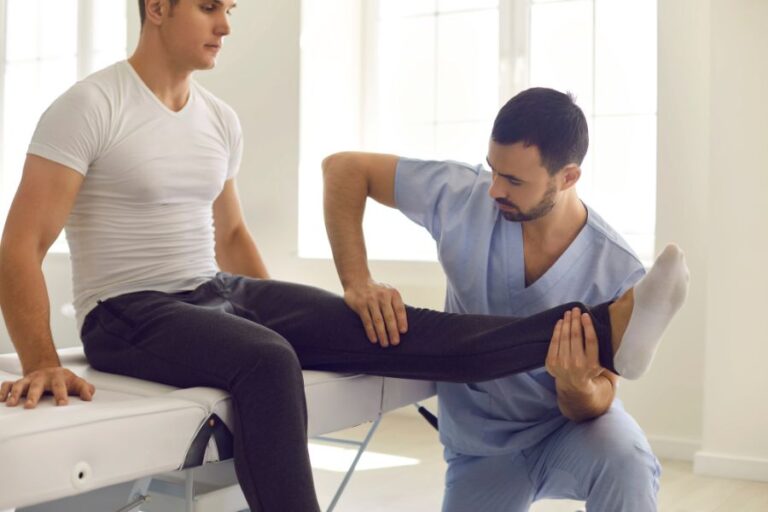
Sports tape should not replace proper assessment. If your knee is badly swollen, gives way, locks, has changed shape or you cannot put weight on it, seek medical advice rather than relying on tape.
What Does Sports Tape Do for Your Knee?
Sports tape can provide external support around the knee joint and kneecap. Depending on the technique, it may help improve stability during activity and provide additional confidence when returning to movement.
Kinesiology tape allows greater flexibility, while rigid sports tape provides firmer control. Knee taping may be useful during rehabilitation or when returning to selected sporting activities, particularly when it forms part of a wider treatment plan.
Does Sports Tape Help With Knee Pain?
Knee taping may provide temporary support or symptom relief for some people. It can be used alongside strengthening, mobility work and rehabilitation exercises.
It is important not to treat tape as a cure. Research into kinesiology tape has shown mixed results, with evidence suggesting any therapeutic benefit may be small in some rehabilitation settings.
If pain continues, becomes worse or affects normal movement, speak to a physiotherapist or medical professional.
What Types of Knee Pain Can Sports Tape Be Used For?
Sports taping techniques are sometimes used for runner’s knee, patellofemoral pain, medial knee pain and anterior knee pain. Taping may also be considered as part of the management of some meniscus related symptoms or patellar tendon pain.
However, similar pain can come from different structures. The location of the pain alone does not always tell you what has been injured, so professional assessment can be valuable.
What Are the Different Types of Sports Tape for Knees?
Kinesiology tape is elastic and moves with the skin, making it useful when you want support without heavily restricting your range of movement.
Rigid sports tape provides stronger mechanical support. Zinc oxide tape is another firm option commonly used for sports strapping.
Underwrap may be placed underneath rigid tape to protect the skin, while specialist patella taping products are designed to support or guide the kneecap.
Kinesiology Tape vs Rigid Sports Tape for Knees
The main difference is flexibility.
Kinesiology tape stretches as you move, while rigid tape restricts selected movements more strongly. This means kinesiology tape may suit rehabilitation where movement is important, while rigid tape may be considered when firmer support is required.
Adhesion and recommended wear time vary between products, so always follow the manufacturer’s instructions. Clear Physio can help you choose the most appropriate taping approach for your symptoms and activity.
How to Prepare Your Knee Before Applying Sports Tape
Start with clean and completely dry skin. Remove oils, creams and sweat, and never place tape directly over cuts, rashes or irritated skin.
Measure the tape before application. If you are using kinesiology tape, rounding the corners may help reduce peeling.
Finally, position the knee comfortably according to the technique. Never force the joint into a painful position simply to apply the tape.
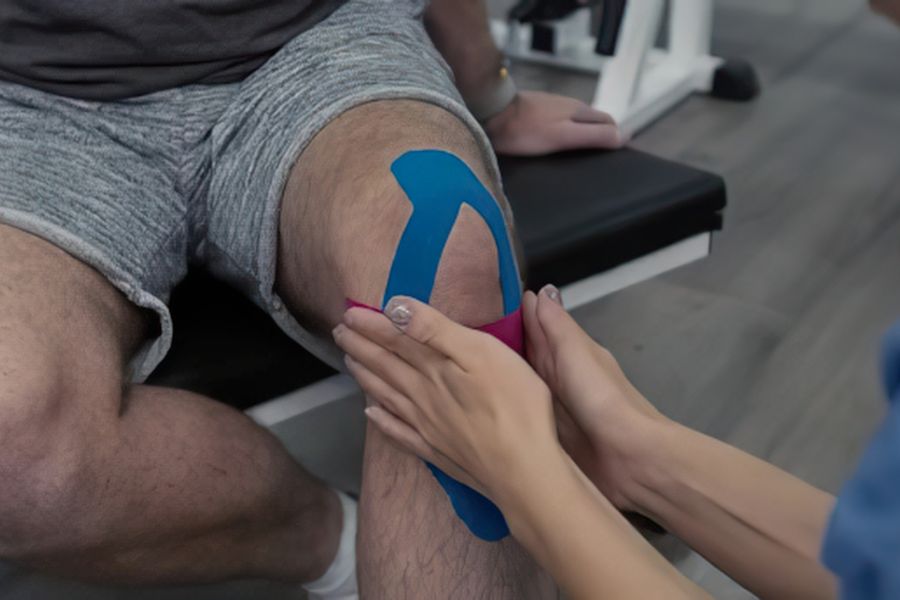
How to Apply Kinesiology Tape to Your Knee
Step 1: Measure the tape
Measure suitable strips that can travel from below the kneecap to above it.
Step 2: Position your knee
Sit comfortably and bend your knee.
Step 3: Apply the first anchor
Place the first section of tape without strong tension.
Step 4: Guide the tape around the kneecap
Follow the natural curve around one side of the kneecap.
Step 5: Apply the second strip
Repeat on the opposite side to create balanced support.
Step 6: Secure the tape
Place the final section with little or no stretch and rub it gently to help the adhesive secure.
Step 7: Check movement and comfort
Bend your knee and walk a few steps. The tape should feel supportive without numbness, tingling or increasing pain.
How to Apply Rigid Sports Tape to Your Knee
Rigid knee taping is more restrictive, so correct placement is particularly important.
Protective underwrap may be placed on the skin before applying the rigid tape. The tape can then be positioned around the structure requiring support, including techniques designed to influence the position of the kneecap.
Check circulation and comfort after application. Remove the tape if you experience numbness, throbbing, unusual skin colour or worsening pain.
How to Tape Your Knee Using the McConnell Technique
McConnell taping is a rigid taping method commonly associated with kneecap support and patellofemoral pain.
You will normally need underwrap, rigid sports tape and scissors. The leg is supported in a comfortable position before tape is placed across the kneecap to influence its position.
Because the direction and tension of the tape are important, learning this technique from a physiotherapist before applying it yourself is sensible.
How to Tape Your Knee for Different Types of Pain
For medial knee pain, taping may focus on supporting the inner part of the knee. With anterior knee pain, the technique often concentrates around the front of the knee and kneecap.
Flexible kinesiology tape or rigid tape may be used around the patella depending on the purpose. For general knee stability, the aim should be support without unnecessarily limiting normal movement.
How Tight Should Sports Tape Be Around the Knee?
Sports tape should feel secure rather than restrictive.
Too much tape tension can cause discomfort or skin irritation. Check that normal sensation and skin colour remain unchanged.
Remove the tape immediately if you experience numbness, tingling, throbbing, increased pain or noticeable circulation changes.
How Long Can You Leave Sports Tape on Your Knee?
Wear time varies between tape products.
Kinesiology tape is usually designed for longer wear than rigid sports tape, and some products can tolerate showering and exercise. Always follow the guidance supplied with your specific tape.
Remove it earlier if the adhesive starts irritating your skin, the tape becomes uncomfortable or your knee symptoms worsen.
Common Mistakes When Taping Your Knee
Applying excessive tension is one of the easiest mistakes to make. Other common problems include taping over irritated skin, choosing the wrong type of sports tape and restricting knee movement unnecessarily.
Another important mistake is continuing to exercise through pain simply because the tape makes the knee feel more secure. NHS guidance advises against running with knee pain until you have recovered sufficiently.
How to Remove Sports Tape From Your Knee Safely
Kinesiology tape should be removed slowly by rolling it back towards itself rather than pulling it sharply away from the skin.
Remove rigid sports tape carefully while supporting the skin underneath. Warm soapy water or a suitable skin safe adhesive remover can help with any residue.
Take extra care if your skin is sensitive or already irritated.
When Should You See a Physiotherapist About Knee Pain?
Persistent knee pain, significant swelling, instability and reduced movement are all reasons to seek professional assessment.
More urgent help may be needed if your knee is extremely painful, badly swollen, changes shape, locks, repeatedly gives way or you cannot move it or put weight on it.
Clear Physio can assess your knee, look at the way you move and advise whether sports taping could be useful as part of your recovery plan.
FAQs About Sports Tape for Knees
Does sports tape really help knee pain?
It may provide temporary support or symptom relief for some people, but its effectiveness varies and the underlying cause of your knee pain still needs consideration.
Which sports tape is best for knees?
Kinesiology tape provides flexible support, while rigid sports tape offers greater movement control. The right choice depends on what you are trying to achieve.
How do you tape a knee for support?
Prepare the skin, position the knee comfortably, apply the appropriate tape around the area requiring support and check movement afterwards.
Can you apply kinesiology tape yourself?
Yes. Some simple applications can be done yourself once you understand the correct positioning and tension. More complex knee taping techniques are better learned from a physiotherapist.
How tight should knee tape be?
Knee tape should feel supportive without causing numbness, tingling, throbbing, skin colour changes or increased pain.